
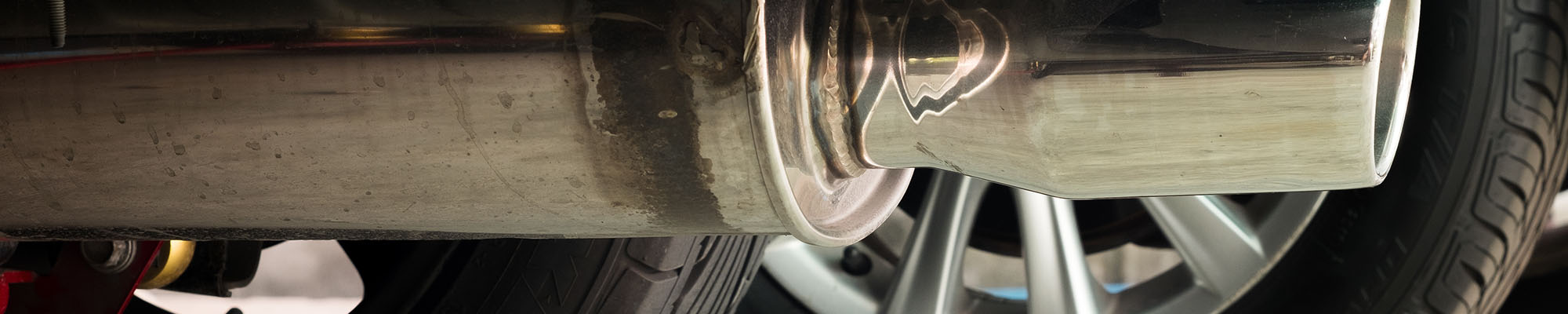
Exhaust Repairs In Nottingham
We supply and fit top brands of car exhausts for drivers across Nottingham at our garage in Stapleford, from a single back box to a complete system.
The Risks Of A Leaking Exhaust
Your exhaust carries hot, toxic gases from the engine to the back of the car, reducing noise and harmful emissions on the way. A leak anywhere along that route lets fumes escape where they shouldn’t.
Those gases include carbon monoxide, which has no colour or smell and is dangerous in an enclosed space. A leak beneath the car can let it into the cabin, especially when you’re sitting stationary in traffic.
A damaged exhaust affects how the engine runs, too. Leaks upset the readings from the oxygen sensors, which can increase fuel consumption, trigger warning lights and lead to an MOT failure on emissions.
Sounds, Smells & Other Warning Signs
- A sudden roar or rumble from the engine, which usually points to a hole or a failed silencer.
- Rattling underneath the car at idle or over bumps, often from a loose heat shield, a broken mounting or a damaged internal baffle.
- A rhythmic ticking or puffing from the engine bay, which can indicate a leak at the manifold.
- A smell of fumes inside the car, which should be checked straight away.
- An exhaust that hangs low or scrapes the road because a hanger has broken.
- The engine management light (which faults with the catalytic converter or oxygen sensors often trigger).
- Worse fuel economy, as a leak can upset the fuel mixture.
How We Repair Your Exhaust
What to expect when you choose us to repair your exhaust:
- We raise your car so we can check the full system, from the manifold to the tailpipe.
- We identify any leaks, corrosion, broken mountings or failed components.
- We show you what we’ve found and which parts are needed.
- We remove the damaged sections and fit new parts with fresh clamps, gaskets and mountings.
- We run the engine to check for leaks, rattles and secure fitment before returning the car.
Parts Of Your Exhaust System
An exhaust is made up of several sections, each with its own job. In most cases, we only need to replace the part that has failed rather than the whole system.
Exhaust Manifold
The manifold collects gases from each cylinder and feeds them into the rest of the system. Cracks or failed gaskets here cause a ticking noise and can leak fumes close to the engine bay.
Catalytic Converter
The catalytic converter uses precious metals to turn harmful gases into less damaging ones before they leave the car. A failing converter can cause poor performance, a sulphur smell and an MOT emissions failure.
Flexi Pipe & Centre Section
The flexi pipe absorbs engine movement, so the rest of the exhaust isn’t stressed as the engine rocks. When it splits, the exhaust usually becomes much louder and may blow noticeably under acceleration.
Silencers & Tailpipe
Silencers use internal chambers and baffles to bring exhaust noise down to a comfortable, legal level. The rear silencer, often called the back box, is usually the first part to rust through, because it collects the most condensation.
Mountings & Sensors
Rubber hangers hold the exhaust in place whilst letting it move slightly, and they perish with age and heat. Oxygen sensors in the system monitor the exhaust gases so the engine can adjust its fuel mixture.
What Affects The Cost Of Exhaust Repairs?
The part that needs replacing makes the biggest difference, with catalytic converters costing considerably more than a silencer or flexi pipe. Some cars use a single welded system, which can mean replacing more than one section at a time.
Corroded and seized fixings can add time to the job, especially on older cars. Replacing related parts such as oxygen sensors, gaskets or heat shields will also affect the final price.
Frequently Asked Questions
-
Is it dangerous to drive with a blowing exhaust?
It can be. A leak may allow carbon monoxide into the cabin, causing headaches, drowsiness or worse. If you have to drive, keep the windows open and have the exhaust inspected as soon as possible.
-
Why do exhausts rust from the inside out?
Every journey produces water vapour, which condenses inside a cold exhaust and mixes with acidic by-products of combustion. Cars used for short trips rarely get hot enough to dry this out, so corrosion builds up much faster.
-
Can an exhaust problem cause an MOT failure?
Yes. A leaking, insecure or excessively noisy exhaust will fail the MOT, as will a missing catalytic converter or any fault that pushes emissions above the legal limit.
-
Is it legal to fit a louder exhaust?
Replacement exhausts must meet noise limits, and it’s illegal to modify an exhaust to make it louder than the original. Excessively noisy exhausts can result in a fine, and some areas now use noise cameras to catch them.
-
What should I do if my catalytic converter is stolen?
You’ll usually know straight away, as the car will be extremely loud when you start it. Report the theft to the police and your insurer, and avoid driving further than necessary, as the exhaust may be damaged and fumes can escape before they reach the back of the car.
-
Do I need to replace the whole exhaust?
Usually not, as most systems are made in sections that can be replaced individually. On older cars where every part is heavily corroded, replacing the whole system at once can be the better long term choice.
Book An Exhaust Inspection
A louder engine, a new rattle or a smell of fumes are all reasons to have your exhaust checked without delay.
Call us on 07546 162 088 or use our online booking system to arrange an inspection.